Can You Build an ICF Home in Phases? Why Dry-In Packages Are Growing in the Ozarks
For many homeowners across the Ozarks, building a custom home can feel overwhelming financially and logistically. That is one of the biggest reasons dry-in packages have become increasingly popular with buyers looking for a more manageable way to build an ICF home.
The short answer is yes.
An ICF home can absolutely be built in phases.
In most cases, the structural shell of the home is completed first, including the foundation, ICF walls, roofing system, windows, and exterior doors. Once the structure is weather-tight, homeowners can complete interior systems and finishes later based on budget, timeline, or personal preference.
At ICF Walls of the Ozarks, phased ICF construction has become one of the most requested project types we handle. After more than 11 years focused specifically on insulated concrete form construction and over 200 completed ICF projects, we have seen firsthand how dry-in packages help homeowners move projects forward without sacrificing structural quality or long-term performance.
This approach has become especially popular throughout Springfield, Branson, Northwest Arkansas, and surrounding rural communities where many landowners are planning retirement homes, homesteads, or long-term custom builds on acreage.
What Is a Dry-In Package for an ICF Home?
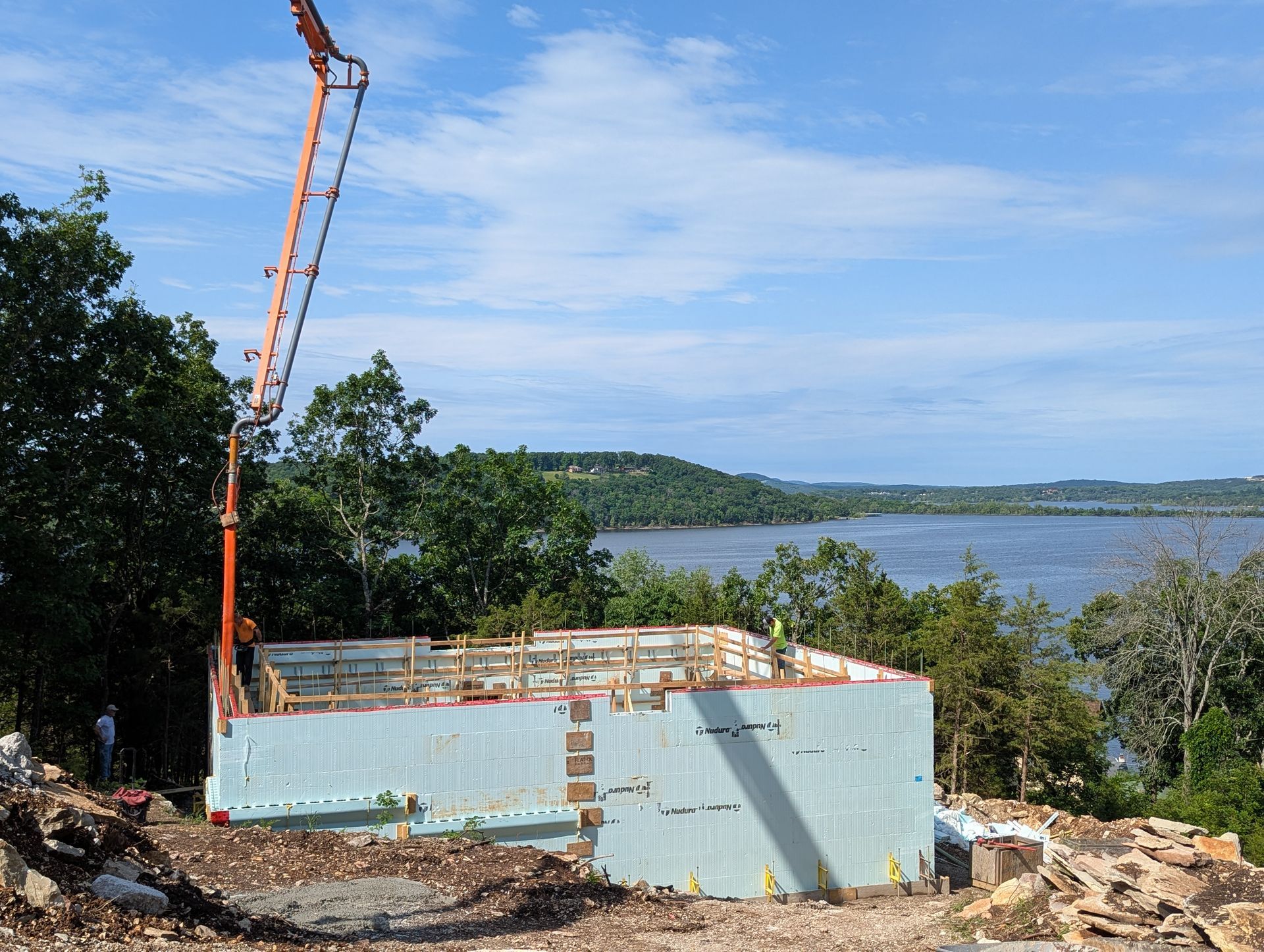
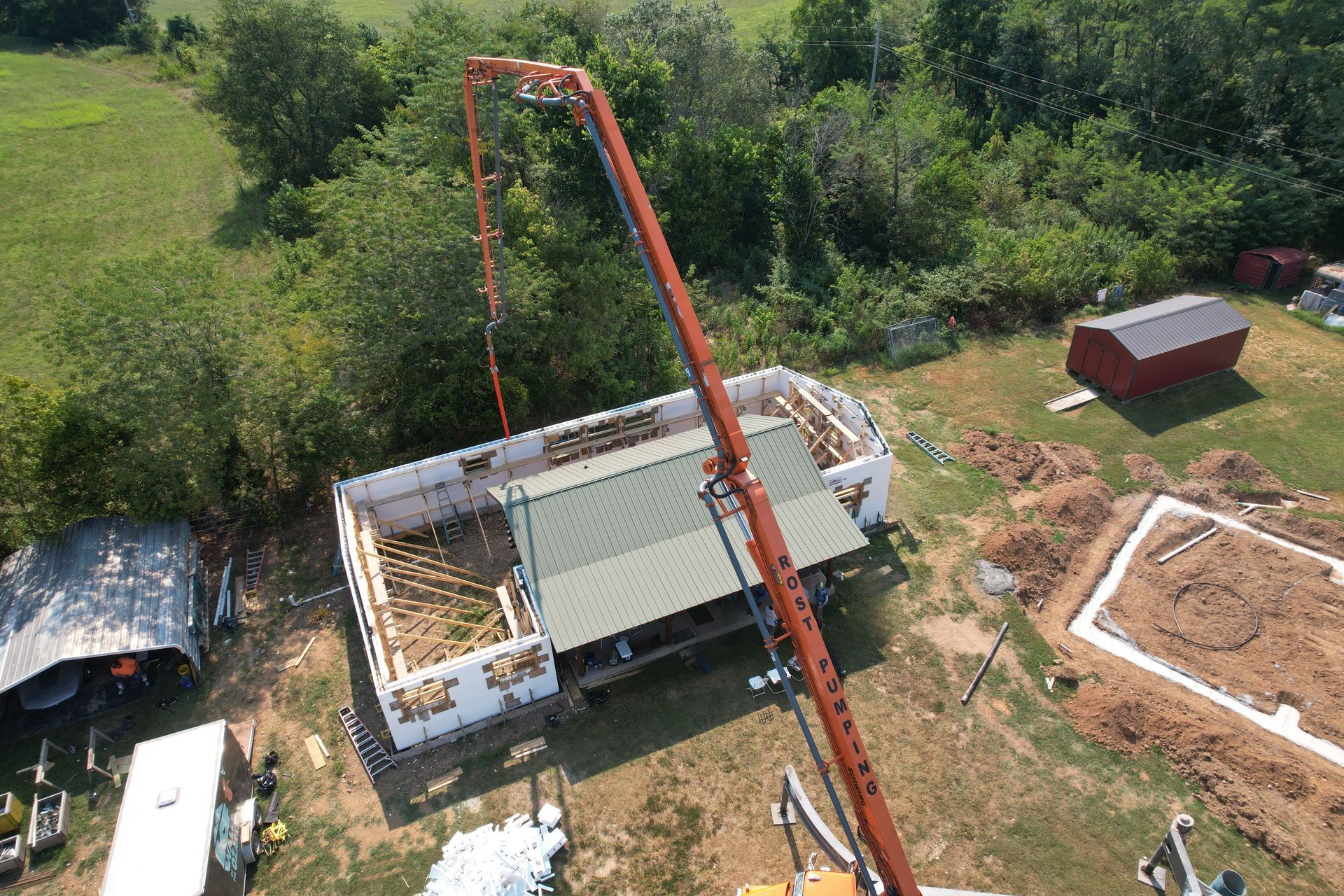
A dry-in package focuses on completing the structural shell of the home first so the building is protected from outside weather before interior work begins.
Structural components commonly included in a dry-in package:
✔ Foundation work
✔ ICF wall installation
✔ Reinforced concrete pours
✔ Roofing system installation
✔ Exterior windows and doors
✔ Structural framing components
Once complete, the structure is considered weather-tight or “dried in.” Interior work such as electrical, plumbing, HVAC, drywall, flooring, cabinetry, and finish work can then happen later.
Many buyers researching dry-in package construction are surprised to learn they do not need to complete every phase of a custom home immediately. The dry-in approach allows homeowners to secure the most important investment first, which is the structural shell itself.
Why More Ozarks Homeowners Are Choosing to Build in Phases
The shift toward phased construction reflects how buyers are approaching homeownership differently today.
Homeowners are asking more questions about long-term durability, energy efficiency, storm resistance, maintenance costs, and realistic construction budgeting.
At the same time, many families throughout Southwest Missouri are trying to avoid taking on every construction expense simultaneously.
Dry-in packages help solve that problem.
Instead of delaying a project entirely, homeowners can complete the structural portion first while continuing to plan the interior over time.
Why This Approach Appeals to More Homeowners
Rural Landowners
Many property owners want to begin construction while continuing to develop their land and infrastructure over time.
Retirees Planning Long-Term Homes
Phased construction allows future homeowners to move projects forward without feeling pressured to finish every detail immediately.
Owner-Builders
Some homeowners prefer to take a more hands-on role during interior phases after the shell is complete.
Families Building on Acreage
Dry-in packages allow construction to begin while still creating room for future budgeting decisions.
“Many homeowners want the strength and efficiency of ICF construction but prefer to spread interior expenses across multiple phases.”
Online discussions about ICF construction repeatedly show buyers looking for ways to balance structural quality with practical budgeting.
Why ICF Construction Works Especially Well for Dry-In Packages
Not every construction method works equally well for phased building.
ICF construction is uniquely suited for dry-in packages because the structural shell itself provides significant long-term value from the beginning of the project.
The Structural Shell Is Built for Severe Weather
The Ozarks regularly experience severe storms, high winds, heavy rain, and dramatic temperature swings throughout the year.
Many buyers searching for storm-resistant and safe room construction are specifically looking for homes designed to perform better during severe weather events.
Why ICF performs well in severe weather regions:
Reinforced concrete wall systems help improve structural durability, reduce air infiltration, and provide stronger resistance against moisture and wind exposure over time.
According to the Federal Emergency Management Agency (FEMA), reinforced concrete safe room systems provide some of the highest levels of residential storm protection available when properly engineered and installed.
That protection matters throughout Southwest Missouri and Northwest Arkansas.
Energy Efficiency Starts With the Structure
ICF homes are also known for strong thermal performance and reduced energy loss because insulation remains integrated directly into the wall system.
Many homeowners researching energy-efficient ICF homes are focused not only on lower utility costs, but also long-term comfort and home performance.
The U.S. Department of Energy continues emphasizing the importance of high-performance building envelopes in improving residential energy efficiency.
ICF Construction Handles Ozarks Conditions Better
Humidity, rocky terrain, freeze-thaw cycles, and moisture exposure all create challenges for traditional building methods in this region.
| Common Ozarks Challenge | How ICF Helps |
|---|---|
| Moisture exposure | Concrete wall systems help reduce long-term moisture concerns. |
| Freeze-thaw cycles | Reinforced structures handle temperature fluctuations more effectively. |
| Termite and rot concerns | Non-organic concrete systems reduce deterioration risks. |
| Severe storms | Improved structural durability during high-wind events. |
This becomes especially valuable when homeowners complete interior phases over time.
How Does a Phased ICF Build Compare to Traditional Construction?
One reason dry-in packages continue growing is because many homeowners are comparing ICF construction directly against traditional stick-built homes.
With traditional framing, structures may be more vulnerable to long-term moisture exposure, temperature fluctuations, and storm-related stress during extended construction timelines.
Advantages of ICF for Phased Construction
- Stronger structural protection during weather delays
- Integrated insulation from the beginning
- Improved durability during long build timelines
- Reduced long-term maintenance concerns
- Better energy performance after completion
This is especially important in the Ozarks where weather conditions can change quickly and many homes are built on rural property with challenging terrain.
Who Benefits Most From a Dry-In Package?
A phased ICF build is not the right fit for every project, but it works extremely well for many homeowners throughout the region.
Landowners Planning Future Builds
Some buyers already own land and want to begin construction before committing to every interior decision immediately.
Families Looking for Better Budget Management
Phased construction allows homeowners to spread interior expenses across a longer timeline while still securing the structural shell first.
Owner-Builders Wanting More Involvement
Many Ozarks homeowners prefer a hands-on approach. The technical concrete and structural work is professionally completed while certain interior phases may happen later.
Buyers Prioritizing Storm Protection
Interest in tornado resistant homes continues increasing throughout Missouri and Arkansas as buyers look for stronger building methods designed for severe weather regions.
What Should You Ask Before Hiring a Dry-In Package Builder?
This is one of the most important parts of the process.
One of the largest concerns discussed online is whether a contractor truly specializes in ICF construction or only occasionally works with the system.
ICF construction requires specialized experience with reinforced concrete systems, engineered pours, waterproofing, bracing systems, moisture management, and structural sequencing.
How Much ICF Experience Does the Builder Actually Have?
Questions worth asking before hiring an ICF builder:
• How many ICF projects has the company completed?
• How long have they specialized in ICF construction?
• Is ICF their primary focus?
• What systems and engineering methods do they use?
At ICF Walls of the Ozarks, ICF construction is not a side service added occasionally to traditional framing projects. It is our primary specialty.
That experience matters significantly when handling engineering, concrete placement, moisture protection, and long-term structural performance.
What Is Included in the Dry-In Package?
Every company structures dry-in packages differently.
Clarifying the exact scope early helps prevent confusion around pricing and expectations later.
What Systems and Materials Are Used?
The company regularly uses Nudura ICF systems and engineered truss systems designed for long-term structural performance.
What Does the Dry-In Construction Process Usually Look Like?
Most phased ICF projects follow a similar process.
1. Site Preparation and Foundation Planning
The process starts with evaluating drainage, grading, utilities, excavation requirements, and foundation planning.
This is especially important throughout the Ozarks where rocky terrain and varying soil conditions can significantly impact construction.
2. ICF Wall Installation and Concrete Pours
Once the site is prepared, insulated concrete forms are installed and reinforced concrete is poured to create the structural shell.
3. Roof System and Exterior Completion
Roofing systems, windows, and exterior doors are installed so the home becomes weather-tight.
At this point, the structure is considered dried in.
4. Interior Finishes Can Happen Over Time
After the shell is complete, homeowners can move forward with plumbing, electrical, HVAC, flooring, cabinetry, drywall, and interior finishes based on their preferred timeline and budget.
Common Misconceptions About Building an ICF Home in Phases
“Building in Phases Means Lower Quality”
Actually, many homeowners are prioritizing the highest-quality portion of the build first by securing the structural shell early.
“You Have to Finish Everything Yourself”
Not at all.
Some homeowners complete portions independently while others continue working with contractors or subcontractors during later phases.
“ICF Homes Are Only for Luxury Projects”
Many buyers choose ICF construction because they are focused on long-term durability, storm resistance, lower maintenance, energy efficiency, and structural longevity.
That includes practical family homes, retirement properties, additions, and rural builds throughout the Ozarks.
Frequently Asked Questions About ICF Dry-In Packages
Can I finish the inside of the home later after the dry-in package is complete?
Yes. Many homeowners complete the structural shell first and finish the interior later based on budget and scheduling preferences.
Are dry-in packages only for full custom homes?
No. Dry-in packages can also apply to additions, garages, safe rooms, and other ICF-related projects depending on the project design.
How long does the dry-in phase usually take?
Project timelines vary based on weather, engineering requirements, site conditions, and home size, but many homeowners are surprised how quickly the structural shell progresses once construction begins.