ICF vs Stick-Built Homes in Missouri: Cost, Strength, Comfort & Long-Term Value
If you're comparing ICF construction to traditional stick-built construction, you're already asking a smarter question than most homebuyers.
Many people spend months choosing finishes, flooring, and countertops but very little time evaluating the structural system that will determine how their home performs for decades.
At ICF Walls of the Ozarks, we've spent more than 11 years building insulated concrete forms homes throughout Southwest Missouri and Northwest Arkansas and have completed more than 200 ICF projects. We've also been involved in residential construction for more than 26 years.
One thing we've learned is that most homeowners initially focus on upfront construction cost. After they begin researching energy efficiency, storm protection, long-term maintenance, and overall ownership costs, the conversation changes significantly.
In fact, one of the biggest misconceptions we hear is that a concrete home costs dramatically more than a traditional wood-framed home. Once homeowners compare actual project budgets and understand the long-term performance differences, they often discover the gap is much smaller than expected.
Because Missouri experiences hot summers, cold winters, severe thunderstorms, high winds, and tornado risk, the way a home is built can have a lasting impact on utility costs, comfort, maintenance requirements, and peace of mind.
In this guide, we'll compare ICF and stick-built construction using the same factors we discuss with prospective homeowners every day: cost, strength, energy performance, comfort, durability, and long-term value.
What Is the Difference Between an ICF Home and a Stick-Built Home?
What Is ICF Construction?
ICF stands for insulated concrete forms.
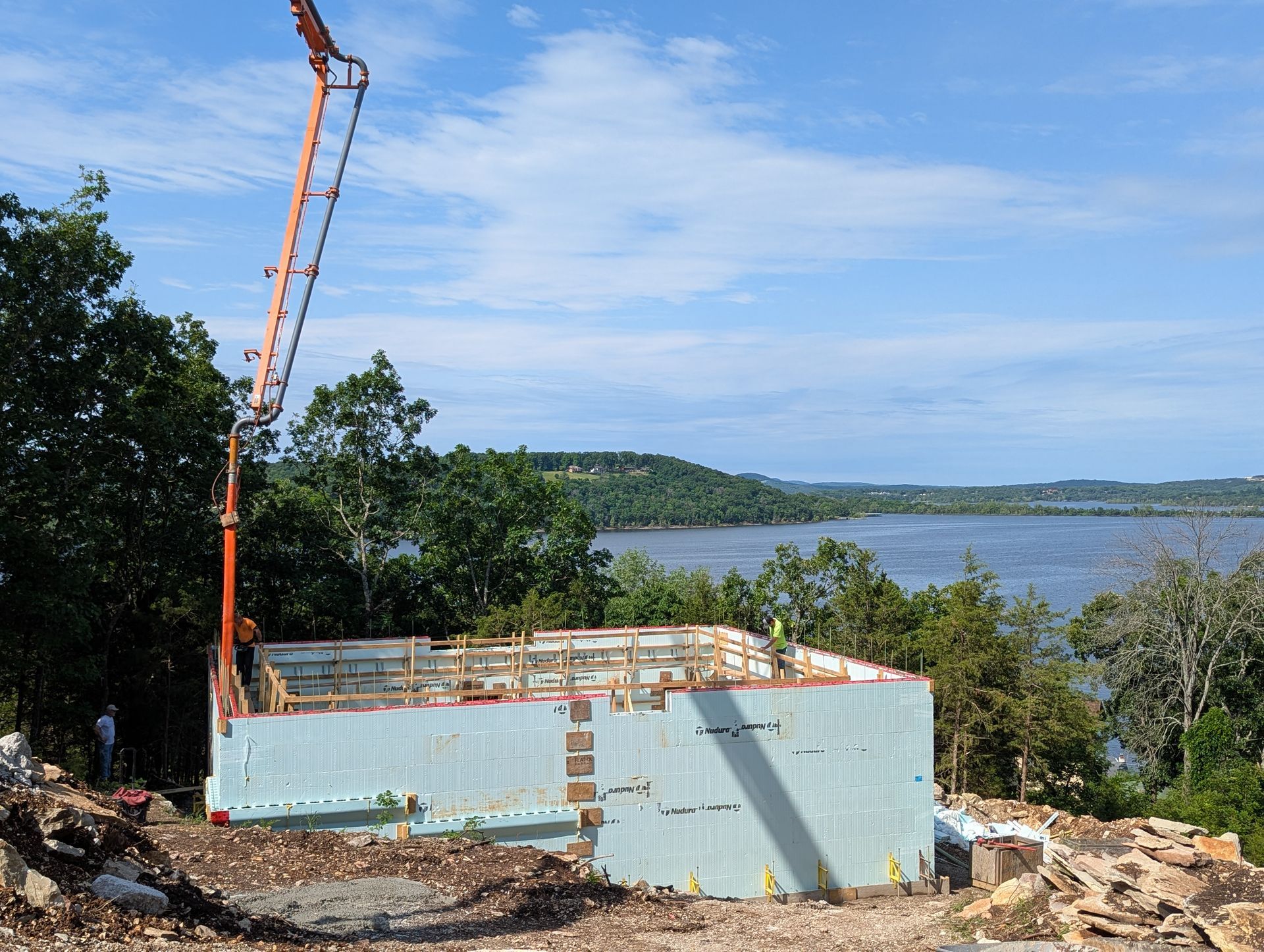
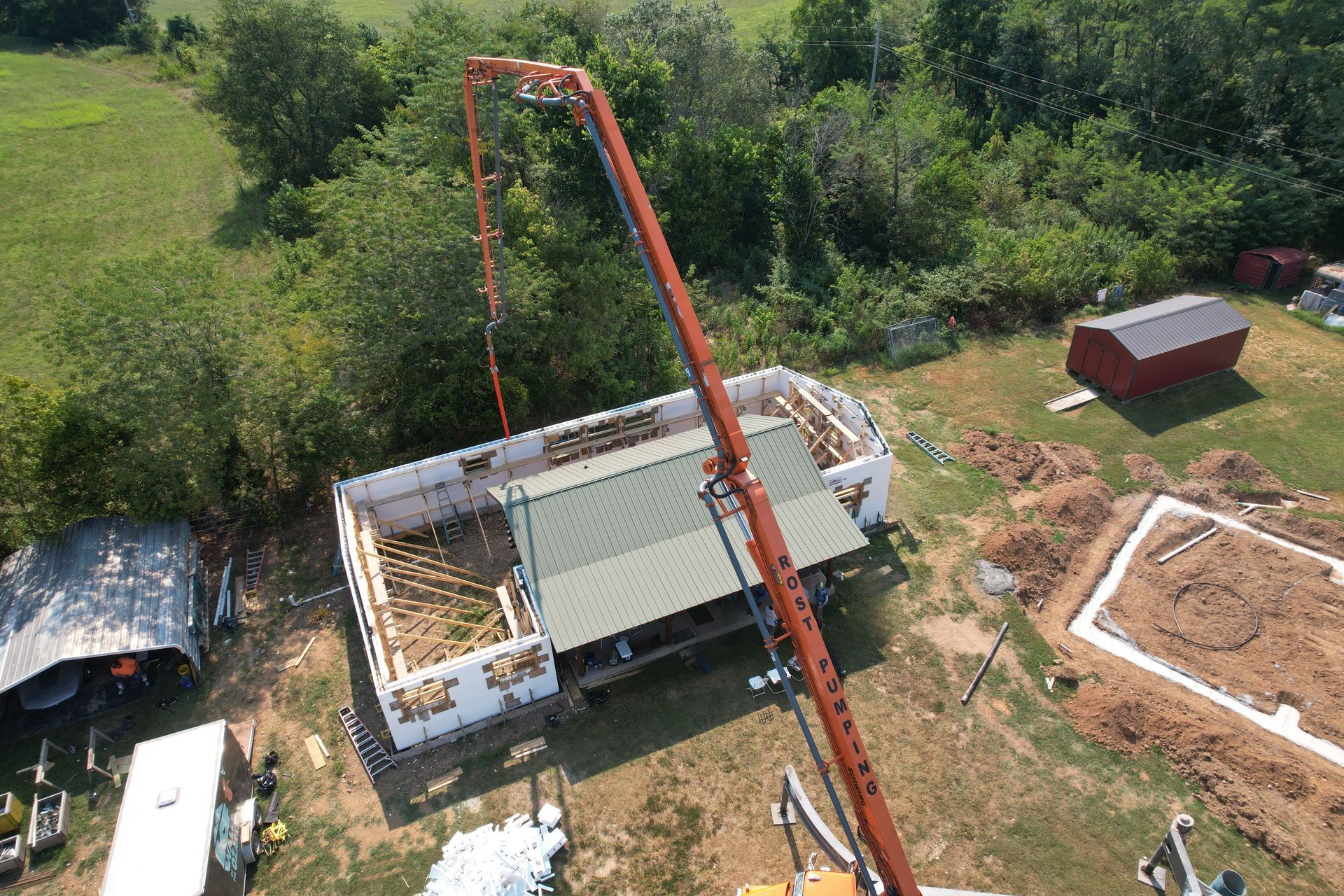
The forms are assembled on-site and filled with reinforced concrete to create structural walls that combine strength, insulation, and energy performance in a single system.
Unlike traditional framing, the wall assembly itself serves as both the structural backbone and one of the primary energy-efficiency components of the home.
Many homeowners first discover ICF while researching insulated concrete forms, concrete homes, or alternative building methods that can better withstand Missouri weather conditions. Others begin their research while exploring a custom home project or evaluating the benefits of an ICF dry-in package.
What Is Stick-Built Construction?
Stick-built construction uses wood framing to create the structure of the home.
Insulation is installed between studs, followed by sheathing, house wrap, siding, and interior finishes.
It's the most common residential construction method in the United States and remains a viable option for many projects.
Side-by-Side Comparison
| Feature | ICF Home | Stick-Built Home |
|---|---|---|
| Structural Material | Reinforced Concrete | Wood Framing |
| Insulation | Continuous | Between Studs |
| Air Leakage | Very Low | Moderate |
| Storm Resistance | Excellent | Good |
| Energy Efficiency | High | Moderate |
| Sound Reduction | Excellent | Moderate |
| Long-Term Durability | Excellent | Good |
Quick Comparison: ICF vs Stick-Built Homes
| Category | ICF Construction | Stick-Built Construction |
|---|---|---|
| Initial Cost | Typically 5-10% higher | Lower upfront investment |
| Energy Efficiency | Often 20-50% more efficient | Varies by insulation quality |
| Wind Resistance | Up to 250 mph in some tested assemblies | Typically built to local code requirements |
| Noise Reduction | Excellent | Moderate |
| Fire Resistance | Up to 4-hour fire ratings in many assemblies | Lower fire resistance |
| Pest Resistance | Concrete is not a food source | Wood can be vulnerable |
| Long-Term Maintenance | Generally lower | Typically higher over time |
| Lifespan | 100+ years potential | 50-100 years with maintenance |
Is an ICF Home Better Than a Stick-Built Home?
For many Missouri homeowners, the answer is yes. ICF homes typically offer greater storm resistance, better energy efficiency, lower noise levels, increased durability, and lower long-term ownership costs.
Traditional stick-built homes generally offer lower upfront costs, easier future modifications, and wider contractor availability.
The right choice depends on your priorities, but homeowners focused on long-term value often find ICF construction provides advantages that extend far beyond the initial build.
What We've Learned After Building More Than 200 ICF Projects
One advantage of specializing exclusively in ICF construction is that we get to see how these homes perform long after construction is complete.
A few lessons consistently stand out.
Homeowners Often Overestimate the Cost Difference
Many people assume a concrete home costs dramatically more than traditional construction. In reality, the difference is often smaller than expected when evaluated against the total project budget.
Comfort Becomes a Bigger Selling Point Than Energy Savings
People often contact us because they're interested in lower utility bills. After moving in, many tell us the consistent temperatures and quieter living environment became their favorite benefits.
Storm Resistance Frequently Becomes the Deciding Factor
For homeowners throughout the Ozarks, confidence during severe weather often becomes one of the strongest reasons to choose ICF over wood framing.
Long-Term Thinking Changes the Conversation
When homeowners begin comparing a concrete home to a traditional wood-framed home over 20 or 30 years rather than focusing only on initial cost, the value discussion often changes dramatically.
Which Home Is Stronger During Missouri Storms?
This is one of the most common questions we hear from homeowners in Springfield, Branson, and throughout the Ozarks.
Tornado Risk
Southwest Missouri sits in a region where severe storms and tornado activity are part of life.
When homeowners begin researching the strongest type of house, storm resistance is usually one of the first factors they evaluate.
High Winds
Even when tornadoes are not present, straight-line winds can cause significant damage.
Over the years, we've spoken with many homeowners who began researching ICF after experiencing storm damage to conventional structures.
Humidity and Moisture
Missouri's humidity creates additional challenges that homeowners don't always consider during the planning phase.
Building materials that can withstand decades of changing weather conditions often provide long-term value.
How ICF Walls Perform in Severe Weather
Because ICF walls contain reinforced concrete and steel reinforcement, they offer structural resilience that traditional wood framing cannot replicate.
The Federal Emergency Management Agency (FEMA) identifies reinforced concrete as one of the most resilient construction materials available for severe weather protection. Homeowners interested in learning more can review FEMA's guidance at FEMA.gov.
Over the past decade, we've found that homeowners are often attracted to ICF for one of three reasons:
- Storm protection
- Energy efficiency
- Long-term durability
Most homeowners initially ask about cost. After learning how ICF performs during Missouri storms and summer heat, the conversation usually shifts to long-term value.
ICF Walls of the Ozarks
How Stick-Built Homes Handle Severe Weather
Wood-framed homes can perform well when properly designed and built.
However, wood framing generally offers less resistance to flying debris, extreme winds, and structural impacts than reinforced concrete wall construction.
Which Construction Method Offers Greater Structural Resilience?
If structural strength is your primary concern, ICF construction generally provides a clear advantage.
This is one reason homeowners searching for tornado-resistant homes, concrete home construction, or the strongest type of house frequently choose to learn more about ICF systems.
Which Home Is More Energy Efficient?
Energy efficiency is often the factor that surprises homeowners the most.
Why Energy Efficiency Matters
According to the U.S. Department of Energy, heating and cooling account for one of the largest portions of residential energy usage.
Improving the building envelope is one of the most effective ways to reduce long-term utility costs. Homeowners can learn more about building envelope performance and energy efficiency at Energy Saver from the U.S. Department of Energy.
How ICF Construction Reduces Energy Loss
ICF walls create a highly insulated and airtight building envelope.
This helps reduce thermal bridging, air infiltration, and temperature fluctuations.
In our experience, homeowners in communities like Nixa, Ozark, and Rogers often notice improved comfort before they notice the utility savings.
Common Energy Loss Points in Traditional Framing
Traditional wood framing can lose energy through stud walls, insulation gaps, air leaks, and thermal bridging.
Even well-built homes experience some of these challenges.
ICF Energy Efficiency at a Glance
| Benefit | Why It Matters |
|---|---|
| Continuous Insulation | Helps reduce energy loss |
| Reduced Air Leakage | Improves comfort |
| Stable Temperatures | Fewer hot and cold spots |
| Lower HVAC Demand | Reduced system workload |
| Better Year-Round Comfort | More consistent living conditions |
Many homeowners tell us the comfort difference is more noticeable than they expected.
Which Home Is Quieter and More Comfortable?
Comfort extends beyond temperature.
Sound Transfer in Wood-Framed Homes
Wood framing allows more sound transmission through walls and structural assemblies.
Outdoor noise, storms, traffic, and lawn equipment are often easier to hear inside the home.
Why Concrete Walls Reduce Outside Noise
The mass of reinforced concrete helps reduce sound transmission dramatically.
This is one reason homeowners building near growing areas such as Bentonville and Rogers often appreciate concrete homes and ICF construction.
Comfort Goes Beyond Temperature
When homeowners describe why they love living in an ICF home, the conversation usually includes consistent temperatures, reduced drafts, and quieter living spaces.
These benefits can improve day-to-day living long after construction is complete.
Comparing Upfront Construction Costs
Is ICF More Expensive to Build Initially?
In many cases, yes.
ICF construction often carries an upfront premium of roughly 5% to 10%, depending on project design, labor availability, and material costs.
What Factors Influence Construction Costs?
The biggest variables typically include:
- Design complexity
- Site preparation requirements
- Material and labor availability
- Project size
Every project is unique.
Why Comparing Only Initial Cost Can Be Misleading
The upfront price is only one part of the equation.
The more important question is often:
What will this home cost me over the next 20 to 30 years?
That includes utility expenses, maintenance, insurance considerations, and long-term durability.
Which Home Offers Better Long-Term Value?
Direct Answer
For homeowners planning to stay in their home for many years, ICF construction often provides better long-term value because it combines lower energy usage, increased durability, reduced maintenance concerns, and greater storm resistance.
While traditional stick-built homes may offer a lower initial investment, many homeowners find that the benefits of concrete wall construction become more apparent over time.
Energy Savings Over Time
Many industry studies suggest ICF homes can reduce energy usage by 20% to 50%, depending on climate, design, and occupant habits.
Potential Maintenance Considerations
| Consideration | Stick-Built Construction | ICF Construction |
|---|---|---|
| Moisture Exposure | Potential concern | Significantly reduced |
| Pest Vulnerability | Wood can attract termites | Concrete is not a food source |
| Structural Movement | More common over time | Generally reduced |
| Long-Term Durability | Good with maintenance | Excellent |
Insurance Considerations
Some insurance providers offer discounts for homes built with more resilient construction systems.
The exact savings vary by carrier and policy.
Resale and Buyer Interest
As awareness of energy-efficient home construction continues to grow, many buyers see value in homes designed for durability, comfort, and lower operating costs.
What Many Homeowners Tell Us After Living in an ICF Home
After completing more than 200 projects throughout Southwest Missouri and Northwest Arkansas, we've noticed a consistent pattern.
The most common comments we hear are:
- "The house stays comfortable even during temperature extremes."
- "The utility bills are lower than we expected."
- "The home is much quieter during storms."
- "We feel more confident during severe weather."
Those real-world experiences often reinforce the value homeowners hoped to achieve when they chose ICF construction.
Common Misconceptions About ICF Homes
Myth #1: ICF Homes Are Only for Luxury Homes
While many custom homes use ICF construction, homeowners build with insulated concrete forms across a wide range of budgets and project sizes.
Myth #2: Concrete Homes Feel Cold
The opposite is often true.
Many homeowners find ICF homes more comfortable because temperatures remain more stable year-round.
Myth #3: ICF Homes Look Like Bunkers
Once finished, most people cannot visually distinguish a concrete home from a traditionally framed home.
Myth #4: ICF Construction Costs Too Much
While upfront costs can be higher, many homeowners find the long-term benefits justify the investment.
Myth #5: You Can't Build Custom Designs With ICF
Some of the most beautiful custom homes we've built throughout the Ozarks have been constructed using ICF systems.
Why Some Missouri Homeowners Pair ICF Construction With Safe Rooms
For homeowners focused on storm protection, combining ICF construction with services such as ICF add-on solutions and safe room options can provide an additional layer of security.
This approach is particularly popular among homeowners building on acreage throughout Southwest Missouri where storm exposure may be greater.
While not every project requires a safe room, many families appreciate having a designated protected space during severe weather events.
Which Home Lasts Longer?
Lifespan Expectations for Stick-Built Homes
Traditional homes can last for generations when properly maintained.
Lifespan Expectations for ICF Homes
Concrete structures have a long history of durability and longevity.
Durability Factors Buyers Often Overlook
| Often Overlooked Factor | Why It Matters |
|---|---|
| Moisture Resistance | Can affect long-term performance |
| Pest Resistance | Impacts maintenance costs |
| Structural Stability | Influences durability |
| Weather Resistance | Important in Missouri's climate |
| Maintenance Requirements | Affects ownership costs |
How to Decide Which Construction Method Is Right for You
| If You Want... | Best Fit |
|---|---|
| Lowest Upfront Cost | Stick-Built |
| Highest Storm Resistance | ICF |
| Lowest Utility Bills | ICF |
| Easier Future Remodeling | Stick-Built |
| Quietest Home | ICF |
| Long-Term Ownership Value | ICF |
| Maximum Durability | ICF |
There is no one-size-fits-all answer.
The right choice depends on your goals, budget, timeline, and long-term priorities.
If you're still researching contractors, we also recommend reading our guide on questions to ask before hiring an ICF contractor.
Frequently Asked Questions
Are ICF homes worth the extra cost?
For many homeowners, yes. The combination of energy efficiency, durability, comfort, and storm resistance often creates long-term value.
How much stronger is an ICF home than a stick-built home?
ICF homes use reinforced concrete walls that generally provide greater structural resilience than traditional wood framing.
Why aren't more homes built with ICF?
Traditional framing has been the standard for decades. However, awareness of insulated concrete forms continues to grow as more homeowners prioritize energy efficiency and storm protection.
What are the downsides of ICF construction?
Potential drawbacks can include higher upfront costs and reduced flexibility for major structural modifications after construction.
Would you build an ICF home again?
Based on homeowner feedback from more than 200 completed projects, many clients tell us they would absolutely choose ICF again.
Thinking About Building an ICF Home?
Whether you're planning a custom home near Springfield, building on acreage outside Branson, or developing property in the growing Bentonville and Rogers markets, understanding the differences between a concrete home and a traditional wood-framed home can help you make a more informed long-term investment.
Still Comparing Your Options?
Every property, budget, and building goal is different.
One of the most valuable things we do for homeowners is help them compare ICF and traditional construction based on their specific project rather than generic online estimates.
At ICF Walls of the Ozarks, we've spent more than a decade helping homeowners evaluate construction options based on their goals, property, budget, and long-term plans.
If you're planning a custom home, home addition, dry-in package, or storm-resistant structure in Southwest Missouri or Northwest Arkansas, we'd be happy to help you explore whether ICF construction is the right fit for your project.
Ready to discuss your build? Visit our contact page to schedule a consultation and learn how an ICF home can provide strength, comfort, and long-term value for years to come.