ICF Custom Homes in the Ozarks: Your Path to Passive-Level Performance and Net-Zero Living
ICF Custom Homes in the Ozarks: Your Path to Passive-level performance and net-zero living
Can a home in the Ozarks really achieve Passive House comfort and net-zero performance? Absolutely—and ICF construction makes it far more attainable in our mixed climate. With long, hot summers, brisk winters, and the ever-present potential for severe storms, the Ozarks demands a building envelope that stays stable, efficient, and resilient. ICF delivers exactly that, giving homeowners a practical path to consistent comfort and meaningful energy savings year-round.
Homeowners today want more than a well-built home—they want one that works smarter, costs less to operate, and performs sustainably for decades. Two of the most recognized benchmarks for high-performance residential construction are Net-Zero Energy and Passive House design, especially the U.S.–based PHIUS (Passive House Institute US) standard.
While ICF alone doesn’t fulfill every PHIUS certification requirement, it naturally aligns with many of the core performance principles that Passive House is built around. For homeowners seeking Passive House–level comfort and efficiency—whether or not certification is the goal—ICF provides one of the most straightforward and reliable paths to high-performance living.
What Passive House Really Means
A Passive House—particularly under PHIUS—is defined by key performance outcomes, including:
- extreme energy efficiency (often 80–90% lower heating/cooling demand)
- consistent indoor temperatures and exceptional comfort
- superior indoor air quality with balanced ventilation
- minimal heating and cooling loads
- very low air leakage (around 0.6 ACH50)
- elimination of thermal weak points
Passive House standards push the building envelope to perform at its best, so the home itself becomes the primary driver of energy savings.
That’s exactly where ICF excels.
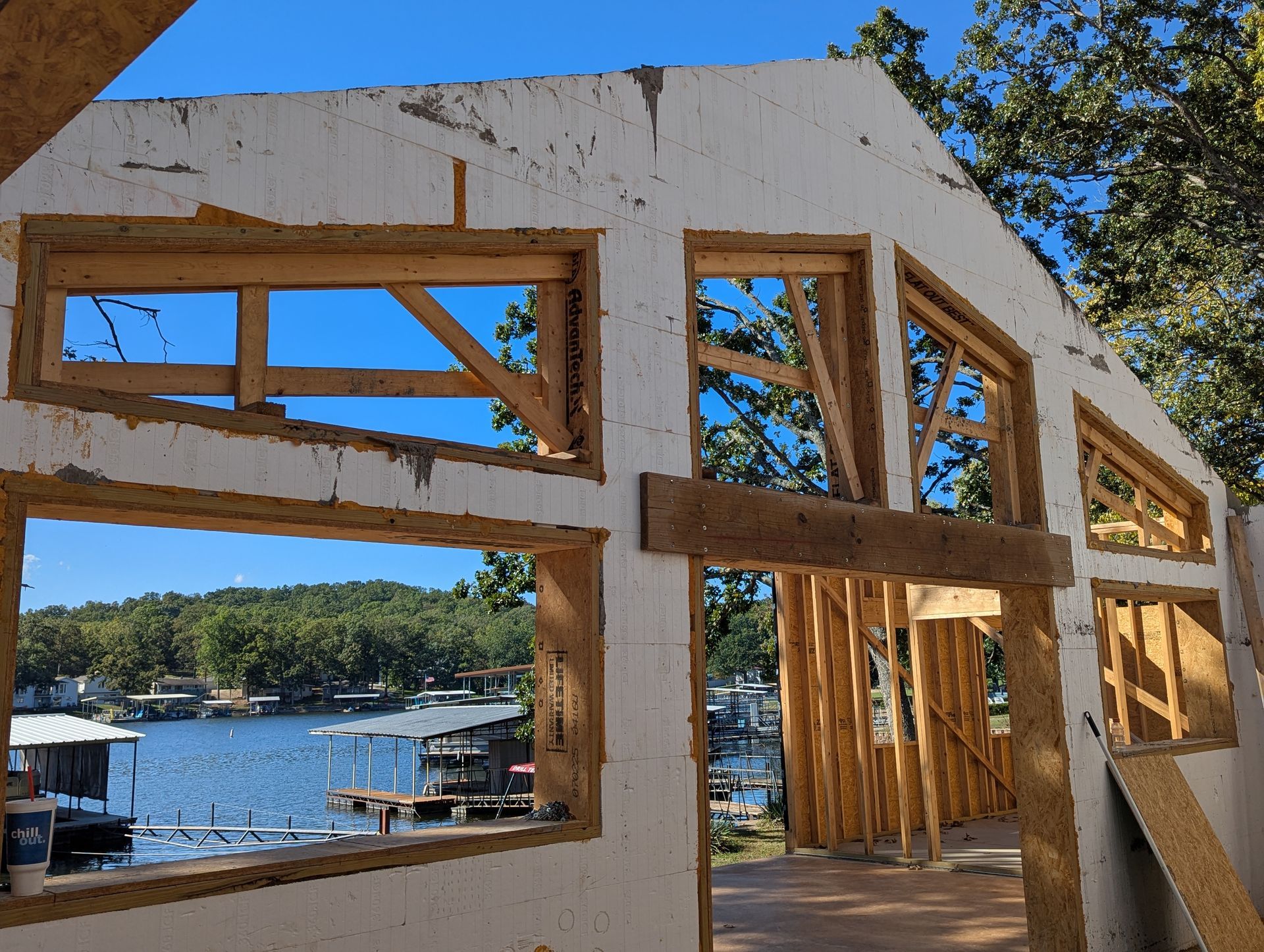
Why ICF Aligns Naturally with Passive House Principles
Most structures need extensive layering, sealing, and upgrading to meet Passive House performance targets. ICF integrates many of these characteristics by design, giving homeowners a strong head start toward Passive House–level performance.
Here are the four biggest reasons ICF construction pairs so naturally with Passive House and net-zero goals.
1. Continuous High-Performance Insulation That Stabilizes Energy Use
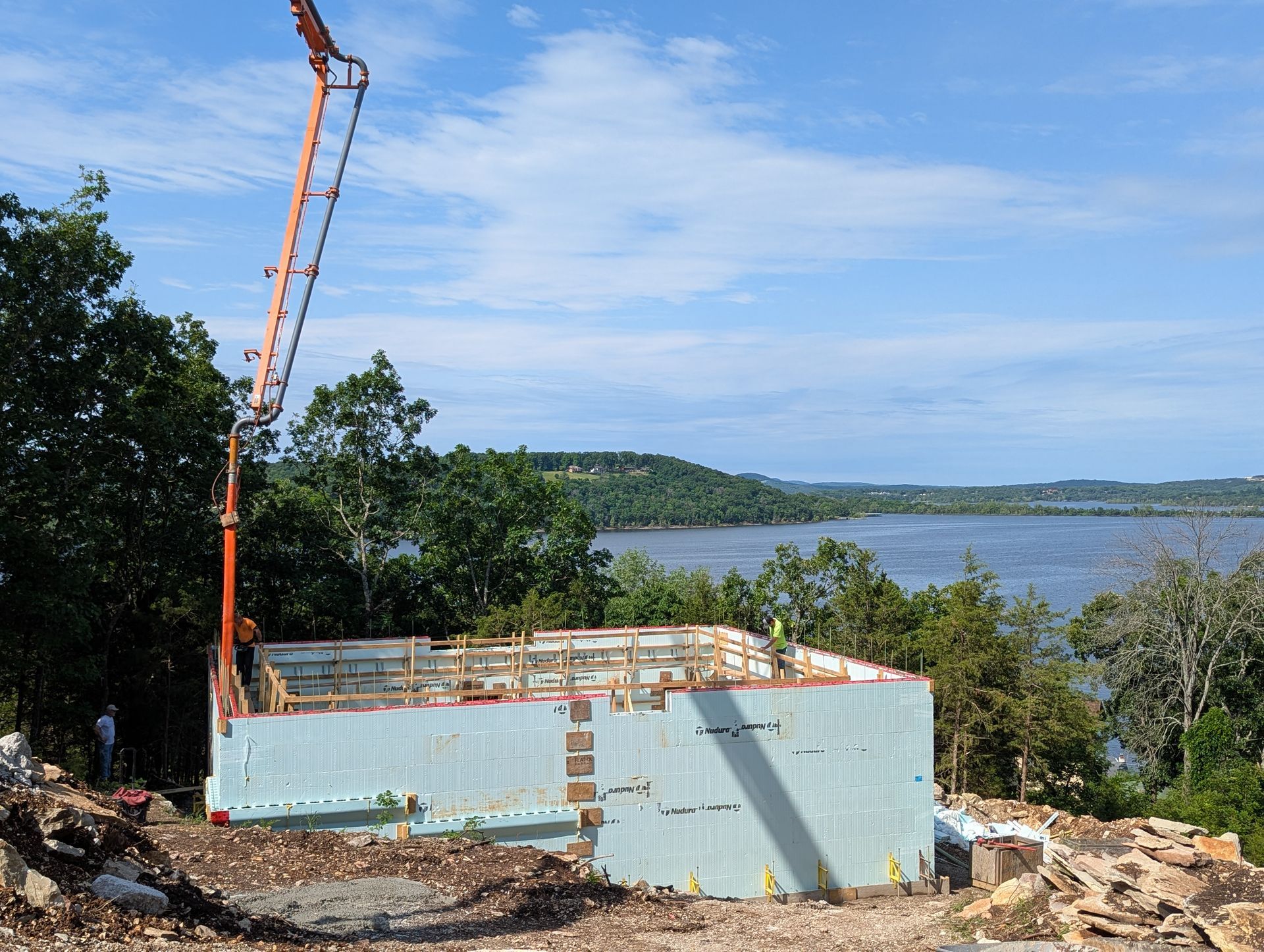
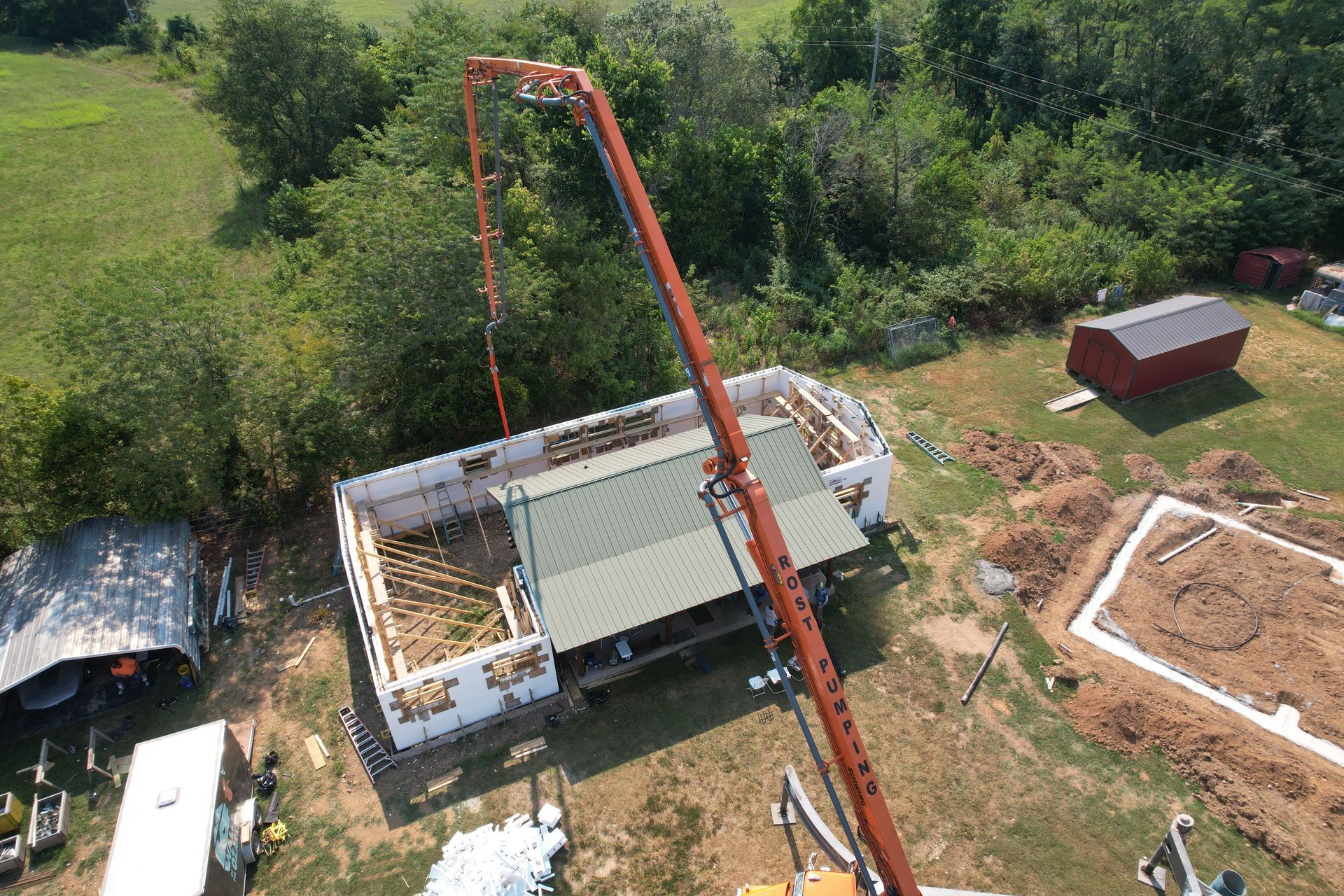
ICF walls consist of two thick layers of EPS insulation surrounding a solid reinforced concrete core, forming a continuous thermal boundary without gaps, seams, or cold spots.
Compared to wood framing, which introduces hundreds of thermal breaks, an ICF wall delivers:
- steadier indoor temperatures
- reduced heating and cooling cycles
- a higher effective R-value due to thermal mass
This level of thermal stability is one of the most important characteristics of Passive House performance.
2. Exceptional Airtightness with Minimal Extra Detailing
Passive House demands very low air leakage, which is challenging for conventional wood framing. Every plate, rim joist, connection, and transition becomes a potential air-leak point that must be sealed.
ICF simplifies airtightness through its structure:
- a reinforced concrete core acts as a continuous air barrier
- two continuous rigid foam layers prevent air pathways through the wall
- our monolithic pour method for both the ICF walls and footing to eliminate cold breaks at the foundation
A tighter building envelope not only improves energy performance but also helps balanced ventilation systems operate at their best.
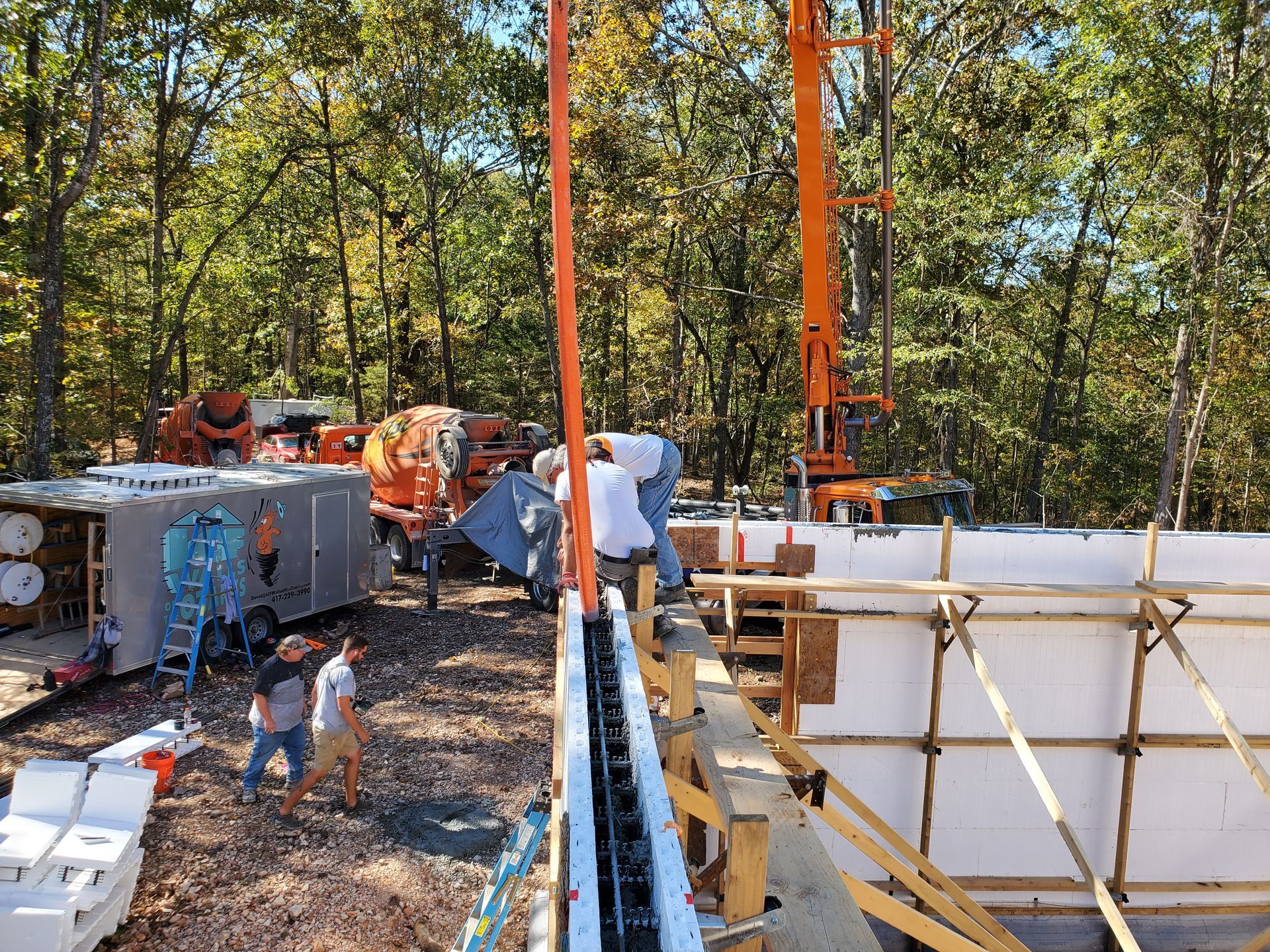
3. Near-Elimination of Thermal Bridging
Thermal bridging—heat loss through conductive materials like wood studs or steel—is one of the biggest performance challenges in traditional construction. Even well-insulated framed walls lose energy quickly if 20–25% of the surface area is framing.
ICF construction virtually eliminates this issue:
- insulation wraps the entire wall system
- the reinforced concrete core provides mass without creating conductive pathways
- corners, transitions, and openings remain insulated and stable
Reducing thermal bridging is key for both comfort and energy performance.
4. A Structure That Supports High-Performance Systems
Passive House is about the harmony of insulation, airtightness, ventilation, and efficient mechanical systems. ICF provides an inherently strong foundation for this balance:
- smaller HVAC systems are typically sufficient
- HRV/ERV ventilation systems perform more efficiently in airtight structures
- high-performance windows and doors operate closer to their rated performance
- the building remains stable, durable, and low-maintenance over time
Instead of forcing a traditional home to meet high-performance standards through upgrades and add-ons, ICF starts much closer to the finish line.
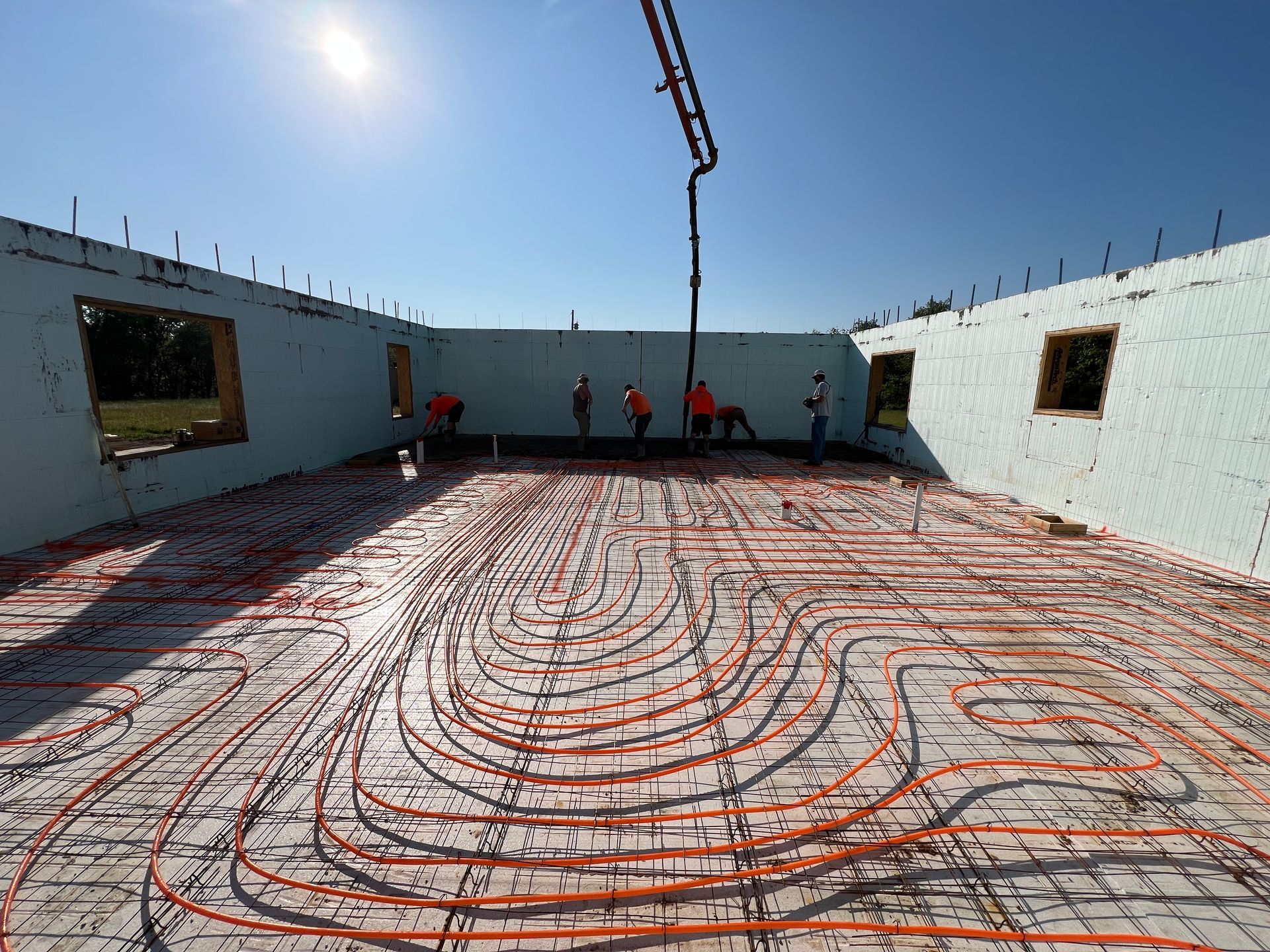
Why ICF Is Also Ideal for Net-Zero Homes
A net-zero home is designed to produce as much energy as it consumes over the course of a year, which requires two things working together: dramatically reducing the home’s energy demand and then supplying the remaining needs with renewable energy—usually solar. ICF construction directly supports this approach by creating a building envelope that uses far less energy to begin with, making net-zero performance far more achievable.
Lower Energy Demand from Day One
ICF homes maintain exceptionally stable indoor temperatures, which means heating and cooling systems run less often and consume far less energy. This reduced demand is the foundation of net-zero design, allowing the home to reach annual energy balance with fewer renewable energy resources.
Smaller, More Efficient Mechanical Systems
Because the building envelope is so efficient, the HVAC system can be noticeably smaller without sacrificing comfort. Smaller systems use less energy, perform more efficiently, and reduce the total load that must be offset by solar generation.
Long-Term Stability That Protects Performance
Energy performance isn’t just a day-one metric—net-zero homes depend on long-term consistency. ICF walls don’t settle, shift, or develop the air leaks commonly seen in wood-frame structures. The airtightness, insulation, and thermal performance you start with remain steady for decades, helping the home maintain net-zero energy balance year after year.
Engineered for the Ozarks Climate
In our mixed-humid region—where summers are hot, winters can be brisk, and humidity swings are common—ICF construction keeps indoor conditions more stable with far less energy input. This climate resilience helps homeowners keep energy consumption predictable, even during extreme weather.
An ICF home built with our Legacy System creates a home that protects both its energy systems and its structure during severe weather. For net-zero homeowners who rely on the continuous performance of their mechanicals and solar equipment, that resilience contributes to long-term energy independence and peace of mind.
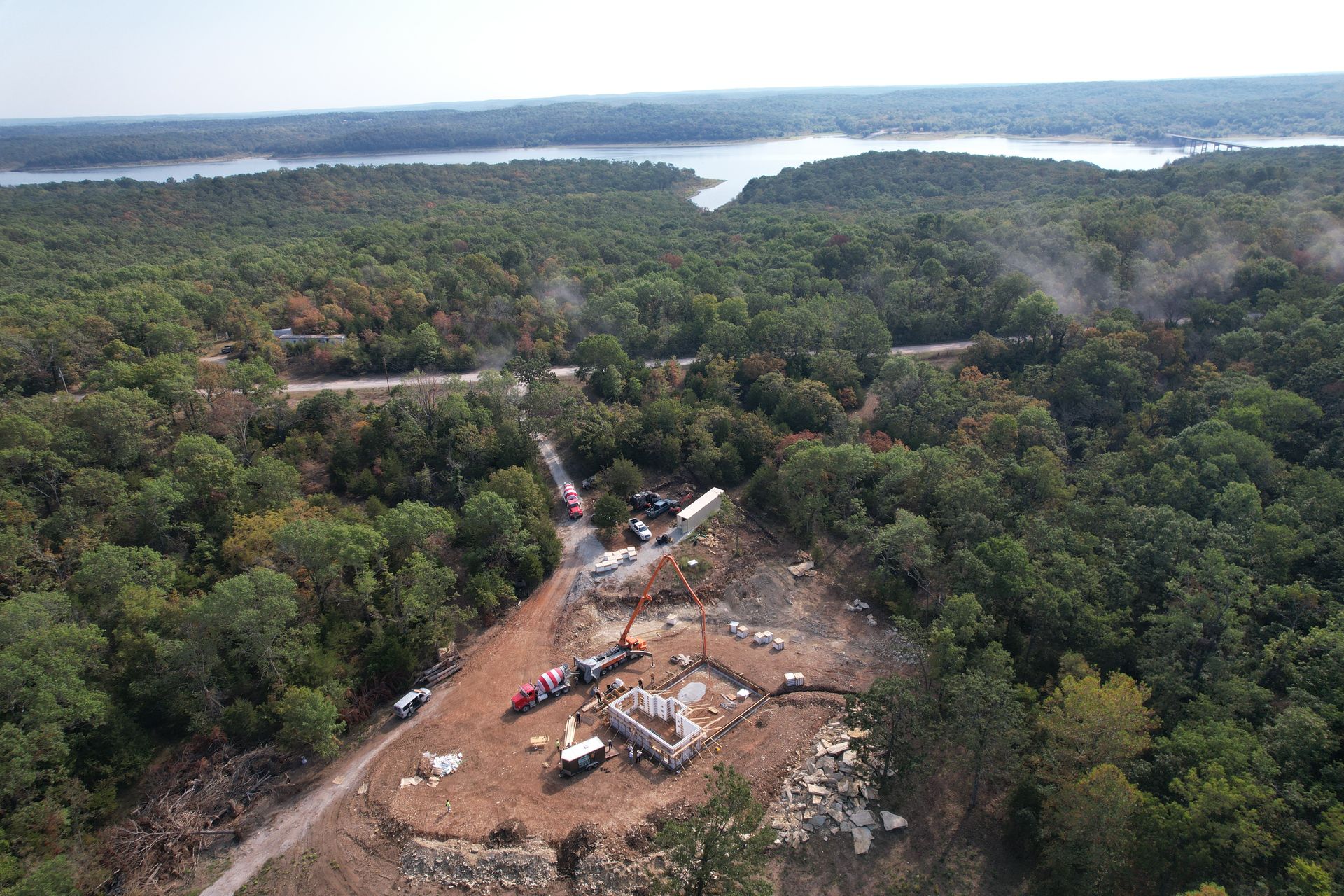
Passive-Level Comfort. Net-Zero Potential. Built for life in the Ozarks.
Whether a homeowner wants to incorporate Passive House principles or aims for a net-zero lifestyle, ICF provides:
- extreme energy efficiency
- stable, year-round comfort
- improved indoor air quality
- long-term savings and durability
- reduced operational carbon
- resilience against storms and severe weather
ICF makes high-performance living more accessible, helping homeowners achieve many of the same benefits associated with Passive House design, even if certification isn’t part of their plan.
Ready to Explore a Passive-Inspired or Net-Zero ICF Home?
ICF Walls of the Ozarks specializes in building efficient, storm-resilient homes tailored to the Ozarks climate. If you’re exploring Passive House principles, net-zero energy, or simply want the most comfortable and durable home possible, we can help you create a home that meets your long-term goals.
Contact ICF Walls of the Ozarks for a free, no obligation project consultation meeting today!